Total Pageviews

Tuesday, 25 May 2021

Do You Remember The Puma Captured In The Highlands in 1980?

 My comments will follow this article from Press & Journal 28th October 2020 

https://www.pressandjournal.co.uk/fp/nostalgia/2591020/big-cats-the-hunt-for-the-puma-caught-roaming-the-highlands-in-1980/?fbclid=IwAR3iwBZsKepGV-1hvXt3KDuUWy4_vGC3qgrvxJl2ZeDVMj4bjvZCgyzgrew

Big cats: The hunt for the puma caught roaming the Highlands in 1980

She was the ‘wild’ puma who became a celebrity after being captured in the Highlands 40 years ago.

Felicity, as she came to be named, had been roaming the countryside in Cannich before being caught two years after farmers in the area started reporting a spate of attacks on their sheep.

There had been mystery animal sightings in the Highlands going back to 1927 when a lynx nicknamed the ‘Tiger of the North’ was caught in a trap set by a farmer after sheep and goats were attacked in the wild mountain districts of Inverness-shire.

Ted Noble

It was reported in 1977 that a man and his nephew at Farr, 10 miles from Inverness, “saw a lioness and two cubs” in a field and the next day a similar sighting was recorded at Culduthel.

However, matters came to a head in October 1980 after farmer Ted Noble took matters into his own hands following a continued unexplained loss of livestock for over a year.
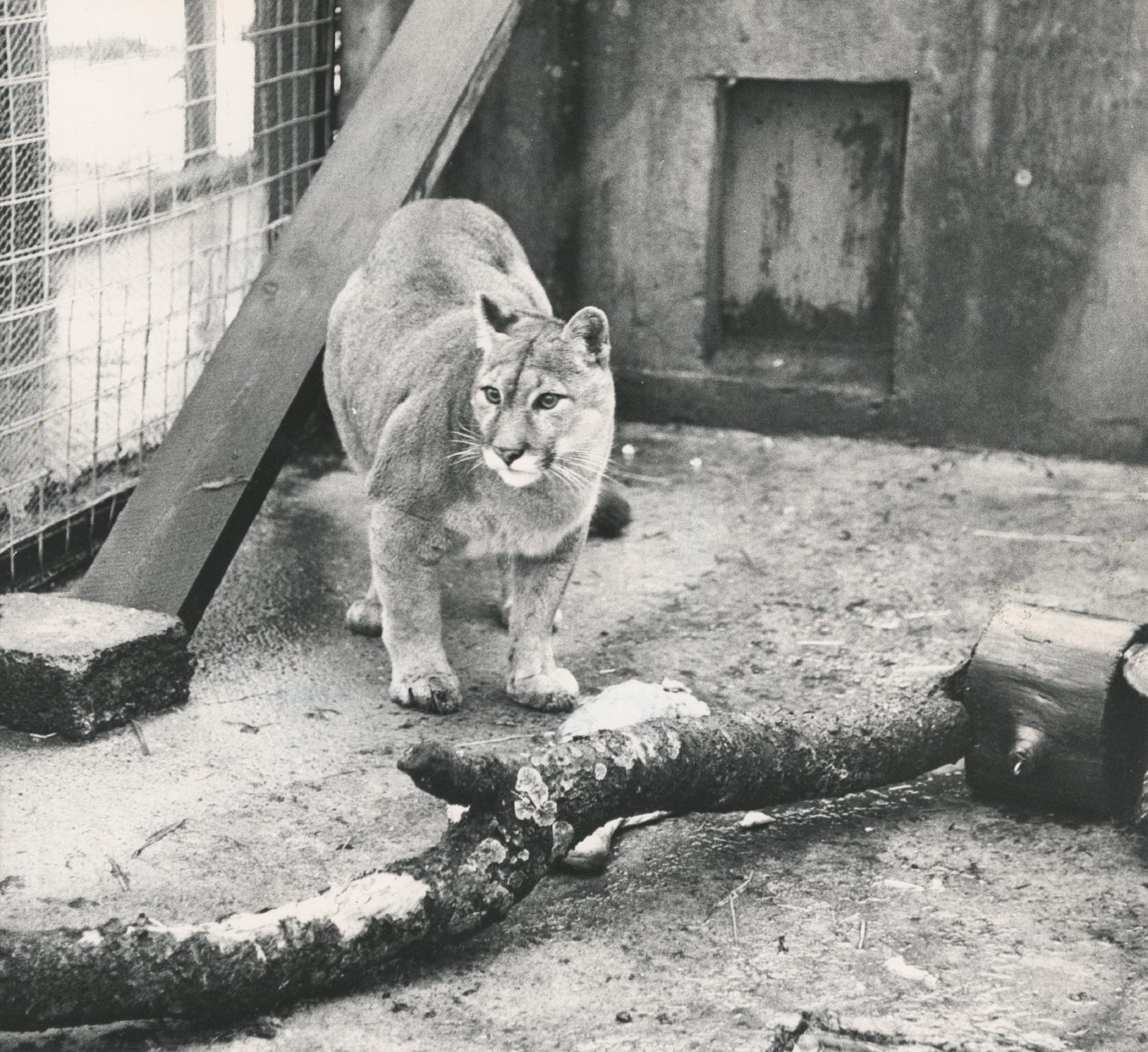
Felicity the puma.

Ted saw what he described as a “lioness or similar member of the big cat family” stalking ponies at his farm near Cannich.

Police searched in vain for the ‘lioness’ with the help of big-game expert Eric Stephens who said a lion could easily be living in the area where there were sheep, horses and deer because there was plenty of food and plenty of cover.

Ted continued to find the carcasses of farm animals, mainly sheep, mutilated and with their bones crushed.

The mystery beast had been sighted a number of times by other local people and eventually he decided to set a trap after becoming frustrated by police reluctance to make a further search.

Last laugh

The animal was enticed to a cage by a sheep’s head dangling from a rope at the entrance to the trap.

The captured puma made national news with one headline proclaiming: ‘Grrr-eat Scot! Farmer Ted Catches the Loch Ness Lion!’

“People were beginning to think I was nuts the way I was so obsessed with capturing this animal,” said Ted.

“But I have had the last laugh.

“I am pleased to have caught it but I am sad to have deprived it of a grand life.

“However, it was a destructive animal having killed sheep and ponies in the area and I had to end its freedom.”

Kincraig Highlind Wildlife Park director Mr Eddie Orbell and retired Detective Sergeant John Cathcart of Inverness.

Ted was aided in his successful trapping operation by Ian Graham, a senior inspector for the Scottish Society for the Protection of Cruelty to Animals, and by Janet Chisolm, a neighbouring farmer of nearby Tomich.

He also had advice on the correct methods to use from a retired Colonel who, in his younger days, had been a big game hunter in Africa.

The director of the Highland Wildlife Park at Kincraig, Eddie Orbell, confirmed the animal was a puma but his conclusion was that the big cat seemed too tame and too well fed to have been living wild.

He believed Felicity had been hand-reared as a cub and had been kept as a pet.

The origin of the puma was unclear but she even allowed experts who examined her to pet her behind her ears.

Overweight

Grantown vet George Rafferty undertook a close examination of Felicity after she was given treatment for a paw complaint.

“I was very surprised to find that the animal weighed 36 kilos – approximately 80lbs,” he said.

“This is definitely overweight for a female puma.

“I examined its teeth and found it has some incisors missing at the front, which is not unusual for an animal of its age.

“Its teeth are in remarkably good condition, although yellow with age.  There is no tarter on them which suggests it has been living on a natural diet, as opposed to processed food.

“It has certainly spent most of its life in captivity.

“If it has been living rough I do not think it has been doing so for very long because of its bodily condition.

“There is also no doubt it has been used to contact with humans and is very well behaved.

“It loves to have its ears tickled and comes straight over to the bars of its cage when you approach.

“In fact we had great difficulty persuading it to go far enough away from us to fire a tranquiliser dart into it without doing any damage.”

Hoax

People soon began talking about a hoax and it was reported soon after Felicity’s capture that some eyewitnesses had seen a puma in a cage being driven around the area in a pick-up truck, although this could have been prior to the animal’s release.

Ted denied there had been a hoax and he was supported by Bob High from the Farmers’ Union who said that many farmers in the eastern Highlands had seen the animal, or lost livestock to it, but were afraid to speak out in case they were ridiculed.

Additional support came from Dr Hans Kruuk from the Institute of Terrestrial Ecology at Banchory, who analysed her faeces in the first hours of captivity which showed that Felicity had recently fed on deer, rabbit and sheep, suggesting that despite her advanced age and tameness she had indeed been hunting and surviving independently in the wild for some time.

The big cat sightings and livestock losses continued following Felicity’s capture and later a man wrote to Ted from a prison cell in England, confessing that he had liberated several big cats in the Glen Affric area after driving them up from south of the Border.

During the 1960s and 1970s it was perfectly legal in the UK to keep exotic animals as household pets, which ranged from leopards, pumas and panthers, to crocodiles and poisonous snakes.
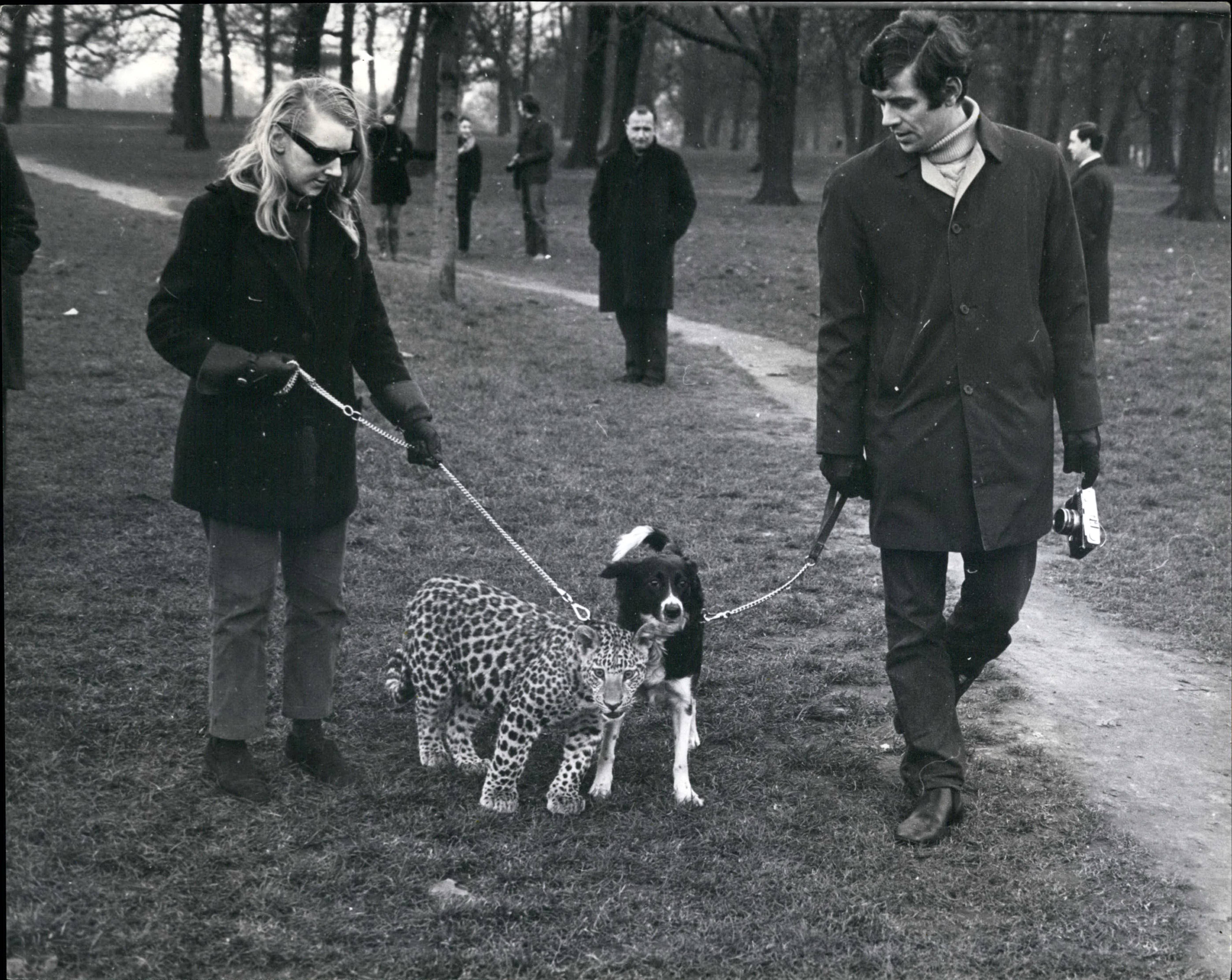
Angela McWilliams, a 23 year old part-time secretary of Kensington, was often seen taking Michael, her pet leopard, for a walk in Kensington Gardens in 1967.

In 1976 the UK Government introduced tougher new licensing rules over the keeping of wild animals without a licence.

Given the choice of acquiring a costly licence or relinquishing their pets to animal sanctuaries, rumours started that some owners chose a third option, which was sending cats out into the wild.

Further twist

The great Highland puma puzzle took a further twist three weeks after the capture as scientists in Banchory revealed strong evidence of another mountain lion on the loose.

Special tests carried out on two sheep mauled on Garve farms in Ross-shire found they were killed either by a puma or some other big cat.

Felicity was a top tourist draw for the next four years at the Highland Wildlife Park, Kincraig, near Aviemore, until she died in February 1985.

After Felicity’s death, the puma was preserved by a taxidermist, and since then has been a prime exhibit at Inverness Museum.


‘Mystery predator’ at large prompted police investigation

Felicity the puma is often cited as evidence that there are non-native cats at large in the UK.

Sightings of big cats or photographs taken at a distance have fuelled theories about their presence for decades.
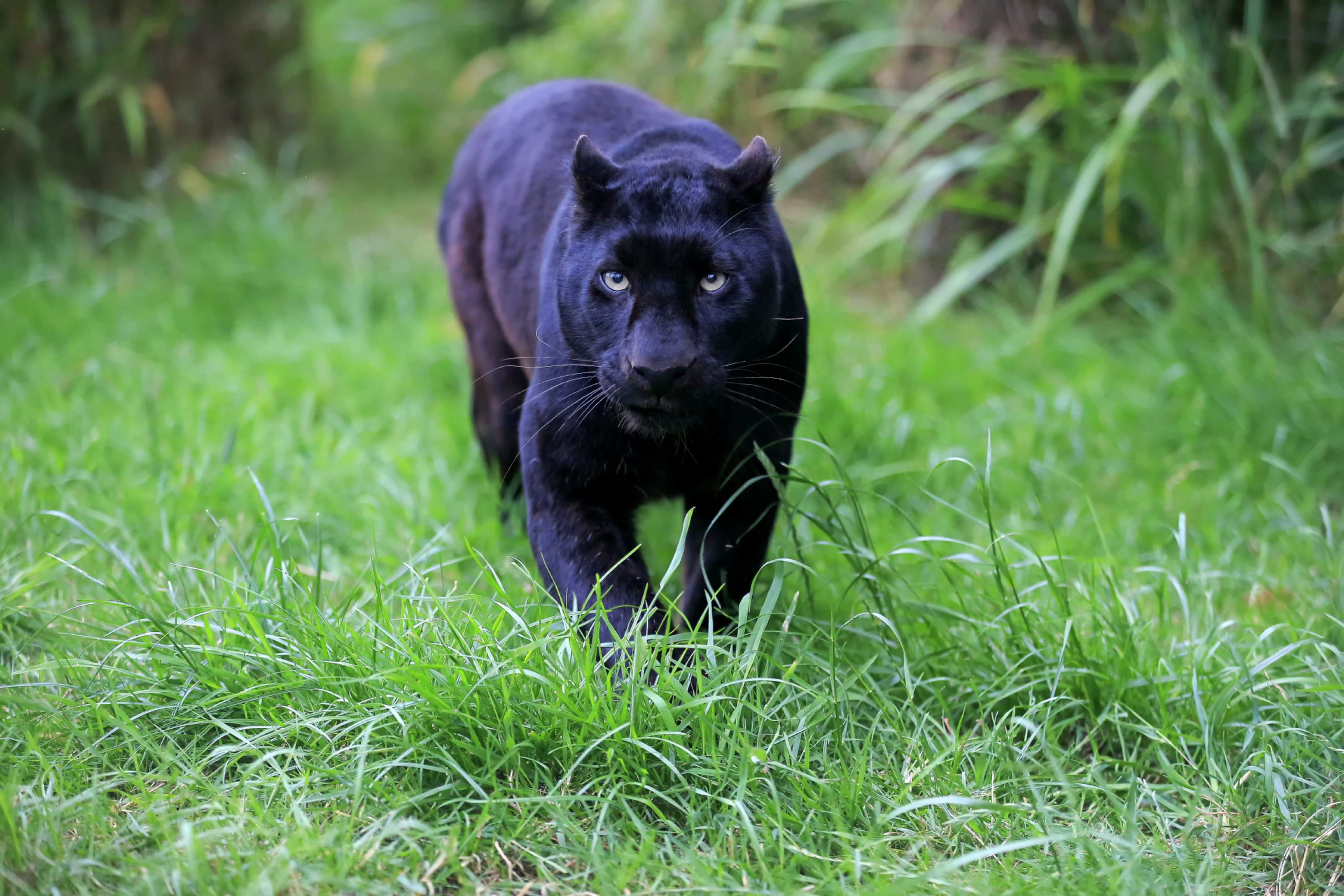
A black panther.

Police and government scientists worked together to try to identify a “mystery predator” that appeared to be at large in the far north.

Correspondence from the past two years between Police Scotland, Science and Advice for Scottish Agriculture (SASA) and other government-funded agencies was released after a freedom of information request.

Injured sheep

A police officer, whose name and title have been redacted, wrote to SASA in November 2018 asking for help in identifying a large paw print.

They wrote: “I’ve had lots of reports over the past three years of big cat sightings and activity on the north coast, mainly in the Bettyhill area of Sutherland.

“There have been sightings of a large feline and a lot of dead or injured sheep.

“On one occasion I was present when a ewe was brought in off the hill with two puncture marks on the front of her right shoulder and two at the back of it.

“The wounds were over three inches apart, while some of the recent carcasses have very large puncture marks.”

The officer conceded that it was a “very controversial topic” but added: “Some crofters say there have always been very big feral cats in this area. I’m told there is a photograph of one shot, years ago, which was over four feet long.

“We definitely have a wild cat population as well; I’ve seen one myself. We don’t have many domestic cats in the area; there is a very sparse human population and miles of unoccupied land.”

The officer sent images of a paw print and one of a “recent kill”, writing: “The carcass was stripped clean, down to the spine/skull.”

The response from the SASA was inconclusive. They replied: “I’m not sure about the footprint. It does look a bit like a feline print but is also reminiscent of a fox or a dog.”

The investigation was closed last year.

***************************************************************

One name is missing from this piece: Arthur Cadman. A veteran naturalist who I was corresponding with in the 1970s/1980s prior to his death. He had been studying a "family" of pumas and had even predicted that due to her age "Felicity" was likely to get trapped as she went for easier game.

This is WHY animals were still being killed after her capture and that capture was, obviously, not a set up/hoax.
When I contacted Ted Noble he was polite but I think the claims of a hoax made him less forthcoming. Ted suggested contacting Janet Chisolm who I corresponded with and was handling all the enquiries. Noble was afarmer and had no time for all the messing around.
I even spoke Ms Chisholm and she confirmed that she had also observed the pumas (plural) and had also made paintings of them and had a 10(?) page account she had written. I was told that I could get a copy of her account -for £10...later £15 and back then that was a lot of money compared to today and as she would not tell me anything about "the story" she had written I had no intention of paying out that much money especially when a journalist from The Scotsman told me "It reads like a childrens story."
There is a lot of evidence for puma still being in the Highlands but further away from farms and where there is plenty of wild game.
We have seen Arthur Cadman pass away and I was never able to find out what happened to all of his notes -and photographs. There were others such as the rev Gwilliam Williams in Wales and all of these people were not high profile newspaper publicity seekers but naturalists.
All of the old contempories of mine have gone. So to have people such as Nigel Brierley, Trevor Beer and Danny Kingdom who I was discussing a cat project with before his tragic death.
Thereare the senationalists and fantasy prone people out there but from all of the naturalists who began studying large cats in the 1970s I appear to be the last survivor. And my Red Paper: Felids will NEVER be published while the official stance of bodies such as DEFRA is to kill all 'non native species' as 'invasives'.
So when I croak the lunatics can have their day.

Monday, 19 April 2021

This is British wildlife history but who cares?


 It was said that The Red Paper was "explosive" with what it revealed about foxes, jackals, coyotes and wolves in the UK.

The follow-up, in which case, is going to be described as "Bloody Hell! We hit an ammo dump!"

There has been one major revellation after another and all are accidental discoveries. Today I received a brief email from a certain establishment. Very casual, however. (lets keep with the military metaphors) I was handed a hand grenade with the pin missing.

Everything is coming together but as there is no funding it will take a while. There appears to be no interest in funding the work from any source and so, as usual, that means plodding on slowly.

And, yes, some of this is inseperable from the Exotic fauna work as well as the work looking at wolverine - yes,breakthroughs- and even the British wild cat (F silvestris) and Ican now state that these cats DID NOT become extinct when we were told -proveable.

This evening, unless I get another email, I am going to sit back and let my head stop spinning. This is British wildlife history but who cares?

Thursday, 1 April 2021

NARFs and The British Fox Study


Above: The North American Red Fox

 If you have not read The Red Paper: Canids then it is very unlikely that you know the true story of British foxes. What we see today can easily be categorised as New Foxes as opposed to Old Fox types. The Red Paper: Canids was described as "explosive" and "totally rewrites the history of the fox in the UK".

The follow up will certainly carry on that tradition. Bit-by-bit I have pieced together that really should shake natural history in the UK to the core. 

We have irrefutable evidence that coyotes, wolves and jackals were released by British fox hunts.  This along with the importation of foxes from Europe as well as breeding foxes for future hunts is something it has taken a good few years to unearth and the information comes directly from the hunts.

I have clearly identified two fox types that seem typical of those found around the country. One of these is quite obviously of North American Red Fox (NARF) or Vulpes fulvus. 

Hayley de Ronde notes that in some areas the NARF has hybridised with or overtaken the number of British Red foxes.  This raises the concern that they will eventually replace the current British fox. She believes that the NARF were released following WW 2 and the eventual end of fur farming.

Hayley de Ronde notes that in some areas the NARF has hybridised with or overtaken the number of British Red foxes.  This raises the concern that they will eventually replace the current British fox.

The Fox Study which I began in 1977 was able to make significant breakthroughs in tracing the history of UK foxes. The current work is designed to try to identify fox types in the UK and note how far and wide certain types are.

There are important points to make.

1. This work is not going to be completed quickly. There is absolutely no funding so things can take a while as everything comes out of my pocket.

2. This is a private research project aimed at giving us a better understanding of UK foxes. There is no governmental involvement, funding and there is no private access to core data given to any government department or agency working with one. People deal with me and no one else. 

3. From 1977-2013 I was an exotic animals advisor to UK police forces and it that time absolutely no witness identification or location data was ever given out. Confidential is confidential and protection of the animals involved is paramount.

4. What I ask for from people who want to help out is simple; 

(a)how long have the foxes been coming to your garden/area? 

(b)Have the foxes always looked the same -no stranger colourations to coats? 

(c)Basic location info.  In Bristol I simply ask for the post code area such as BS2 or BS 11. Outside of the City & County of Bristol I simply ask for the town, city or village. This is to help me see what types are in what areas.

(d) Photographs. People may love their foxy visitors but they take them to be "just foxes". With a photograph or series of photos I can see a lot more and that information helps greatly.

(e) If you have a name for the fox(es) that visit please note that with photos because if there is something unique spotted at least I can say which fox I'm talking about.  All photos/videoes are logged with the photographers Name and Town or area. I do not claim any rights to the photographs or video clips received so please do not be concerned that these will be used widely or without your permission.

From all of this I can hopefully produce something useful to people interested in foxes.

If you can help then please email me at:  blacktowercg@hotmail.com

If you see a black fox it may well be an escaped pet and those have been killed in road accidents, shot and even snared in the past as they are domesticated pets and not capable of living in the wild. The best people to contact (if you can get a photo it helps) are Black Foxes UK and their contact info can be found here: 

https://www.blackfoxes.co.uk/contact-us.php

THANK YOU


Saturday, 27 March 2021

Dog-walkers warned as 20 giant South American rheas rampage around Herts housing estate

 Anyone know where they came from?

Around 20 giant South American birds are on the loose in Hertfordshire - with police warning they have been seen attacking dogs.

The rhea birds, which can grow to around 5ft tall and have a top speed of 50mph, have been spotted near Maple Cross.

Similar to an ostrich but smaller, the animals are believed to be wild.

PC Christian Gottmann, from the Rickmansworth and District Safer Neighbourhood Team, said: "These birds are certainly an unusual sight on the streets of Three Rivers.

"We want to reassure the public that we are working in partnership with Three Rivers District Council, Highways and our Rural Operational Support Team to come up with a plan to capture and rehome the birds to a suitable animal reserve.

"If you think you may be able to help with this, please get in touch with us. In the meantime, we would advise the public not to approach these animals as they are very fast, much like their larger counterparts, and can be aggressive if cornered.

"Unfortunately we have received reports of them attacking dogs and deer, so we ask that dog owners are vigilant when out walking."

The birds are the largest in South America, where they originate from, and can reach speeds of 50mph.

This is not the first time the rhea has been spotted roaming the streets of the UK.

In 2015, there were two sightings of male rheas in Worksop, Nottinghamshire but they belonged to a local man.

And last year, the long-necked bird was spotted walking between cars on the A12 in Colchester, causing traffic jams.

Thursday, 18 March 2021

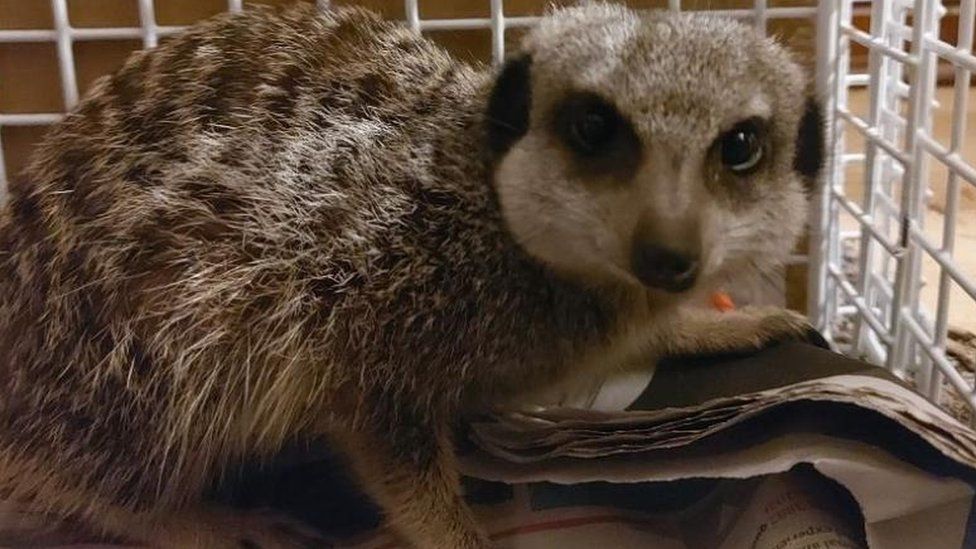
Two meerkats rescued from Dundee street

 https://www.bbc.co.uk/news/uk-scotland-tayside-central-56401540?fbclid=IwAR2jsff3XJs3Vi5vNDPnsgY7P05TUakV_BHd3-HyyQtVDewMTZUDyual8ig

MeerkatIMAGE COPYRIGHTSSPCA
image captionOne of the two meerkats rescued from Dundee's South Road

Two meerkats have been rescued after being spotted in a Dundee street.

The Scottish SPCA managed to catch one of the animals last Friday and the second on Saturday.

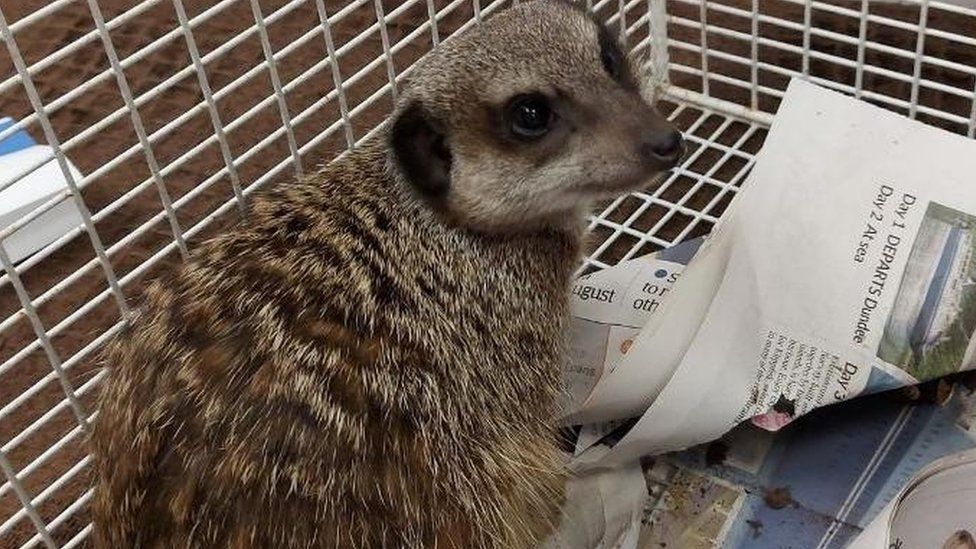
The charity believes the meerkats, which were both picked up from South Road, had been kept as exotic pets before escaping or being abandoned.

Meerkats are native to deserts and grasslands of southern Africa. Both rescued animals are now in the care of Dundee's Camperdown Wildlife Park.

MeerkatIMAGE COPYRIGHTSSPCA
image captionIt is thought the meerkats had been kept as pets

Ben Soutar, of the SSPCA, said: "It was certainly a very unusual rescue. I've never been called to rescue a meerkat before.

"We checked with Camperdown Wildlife Park but all their meerkats were accounted for, so it's a bit of a mystery as to where these two have come from."

The meerkats appeared to be "quite tame".

Mr Soutar said: "As with all exotic wild animals, we wouldn't recommend people keep animals like meerkats as pets as they have specialist needs that would be very hard for the average member of the public to replicate in a home environment."

Britain's X Files TV show Dismisses eye witness testimony and Evidence

I was sent a clip of Blaze TVs Britain;s X-Files in which Richard Freeman of a certain cryptozzology group, stated that the Special Air Serv...